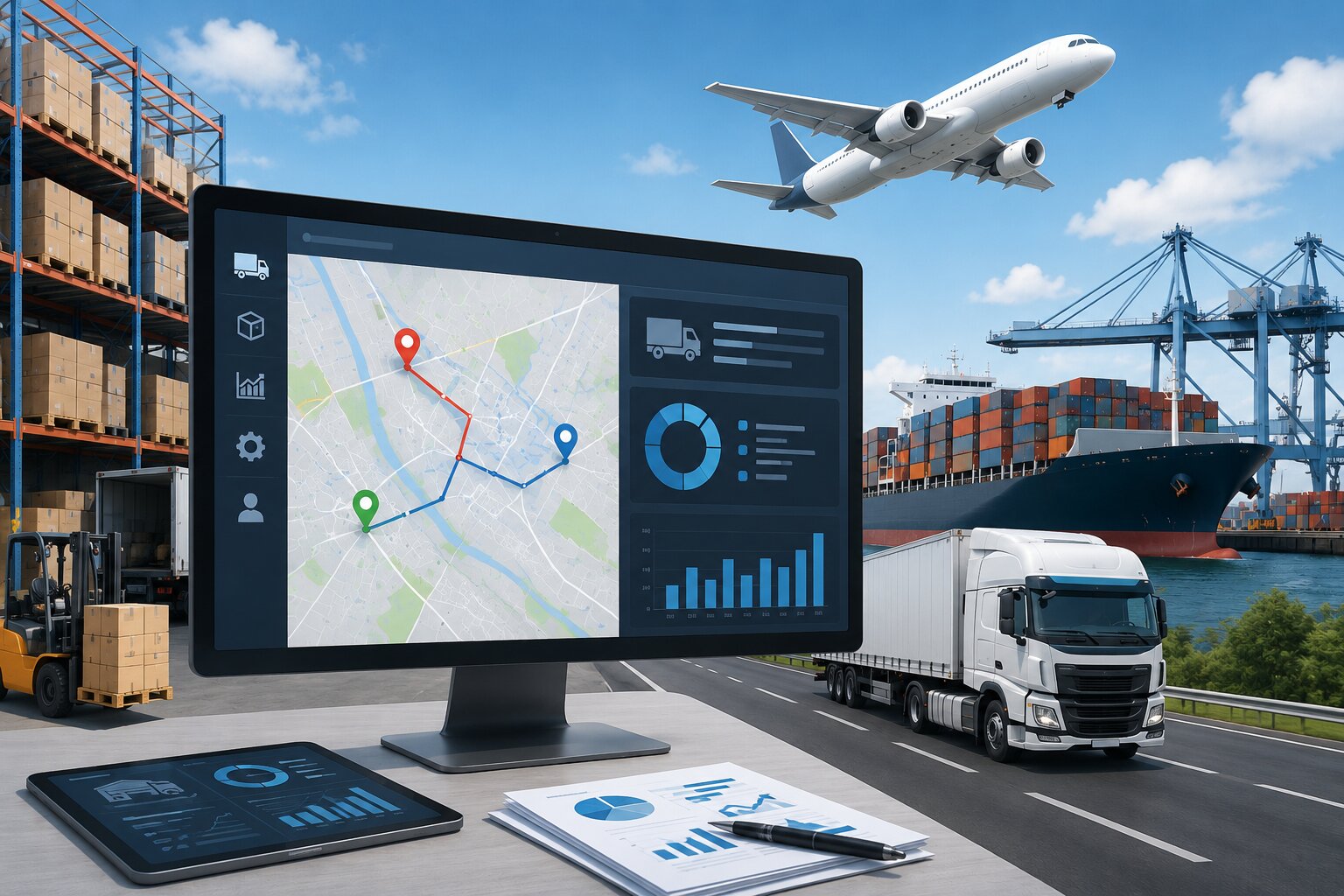
Every truck on the road, every consignment awaiting dispatch, and every freight invoice raised each day adds another layer of complexity to running a logistics business. As fleets grow and operations spread across states, tracking trips, costs, and compliance on spreadsheets quickly becomes unmanageable. This is where a Transport Management System comes in — a digital backbone that brings order to an otherwise fragmented process.
Understanding a Transport Management System
A Transport Management System (TMS) is a software platform that helps businesses plan, execute, and optimize the physical movement of goods. It covers everything from route planning and freight billing to vehicle tracking, driver management, and delivery confirmation. In simple terms, it is the control tower that gives logistics companies real-time visibility into what is happening across their fleet and operations.
For companies handling large volumes of shipments, a standalone TMS is useful, but many businesses now prefer a broader Transport Management ERP software that connects transport operations directly with finance, inventory, and compliance functions. Instead of switching between multiple disconnected tools, everything — from trip costing to GST-compliant invoicing — runs on a single unified platform.
Why Transport Businesses Need More Than Basic Tracking Tools
Running a fleet in India comes with unique operational challenges: fluctuating diesel prices, toll expenses, driver advances, delayed proof of delivery, multi-state GST rules, and e-way bill documentation. A basic tracking app can show you where a vehicle is, but it cannot tell you whether that trip was profitable, whether the invoice has been raised correctly, or whether receivables are piling up.
This is why ERP software for logistic & transportation companies has become essential rather than optional. When transport operations are integrated with accounting and inventory modules, businesses gain a complete financial and operational picture. Trip-wise costing, vehicle-wise profitability, warehouse stock movement, and receivable aging can all be tracked from one dashboard, eliminating the guesswork that comes with manual reconciliation.
Core Functions of a Transport Management System
- Trip and Route Planning A TMS helps plan the most efficient routes, allocate vehicles, and assign drivers, reducing fuel wastage and turnaround time.
- Freight Billing and Compliance Freight rates in India vary by distance, weight, and customer contract. A good system generates accurate, GST-compliant invoices along with e-way bill and e-invoicing support, reducing billing errors and delays.
- Driver and Expense Management Trip advances, fuel card reconciliation, daily allowances, and settlement records are tracked systematically, improving accountability and reducing financial leakage.
- Vehicle Maintenance Tracking Preventive maintenance schedules, service history, and insurance renewals help avoid unexpected breakdowns and extend vehicle life.
- Warehouse and Inventory Visibility For 3PL providers and multi-branch operators, stock movement across warehouses can be tracked in real time, supporting accurate inventory ageing and order fulfilment.
- Proof of Delivery and Document Management Digitising POD collection accelerates invoicing cycles and reduces disputes with customers.
- Reporting and Business Intelligence Dashboards covering route performance, diesel efficiency, and outstanding receivables give management the insight needed to make faster, better-informed decisions.
The Growing Demand for Transport Software in India
India’s logistics sector is expanding rapidly, driven by e-commerce growth, manufacturing output, and nationwide supply chain expansion. Yet a large share of transport companies, freight forwarders, and Custom House Agents still rely on manual processes or disconnected tools. This gap has fuelled strong demand for reliable transport software in India that understands local business realities — multi-state GST filing, e-way bill mandates, diverse freight contracts, and the day-to-day realities of fleet operations.
Choosing the right system isn’t just about automation; it’s about building financial discipline into transport operations. Companies that adopt an integrated platform typically see faster billing cycles, better cost control, improved driver accountability, and stronger cash flow management, all of which directly impact profitability.
Choosing the Right Solution for Your Business
Not every transport company needs the same set of features. A small fleet operator may prioritise trip costing and driver expense tracking, while a large 3PL provider or freight forwarder may need multi-warehouse inventory management and job-based costing for customs clearance work. The right system should be scalable enough to grow with the business, whether that means adding more vehicles, entering new states, or expanding into freight forwarding and warehousing services.
Final Thoughts
A Transport Management System is no longer a luxury reserved for large logistics networks — it is fast becoming a necessity for any transport, freight, or warehousing business that wants to stay competitive. By connecting operations with finance and compliance, businesses gain the visibility needed to control costs, speed up billing, and make confident decisions.
At Preeminent Softcom, we help logistics, transport, and CHA businesses across India implement customised ERP solutions built around real operational needs — from trip costing and freight billing to warehouse management and financial governance. If your business is still relying on spreadsheets to manage complex transport operations, it may be time to explore a smarter, integrated approach.
Ready to modernise your transport and logistics operations? Get in touch with Preeminent Softcom to schedule a consultation.
FAQs
1. What is a Transport Management System used for?
A Transport Management System is used to plan routes, manage freight billing, track vehicles and drivers, and monitor overall fleet performance, helping logistics businesses run more efficiently and profitably.
2. How is a Transport Management ERP software different from a regular TMS?
A standalone TMS mainly handles trip and fleet operations, while a Transport Management ERP software connects those operations with accounting, inventory, and compliance modules, giving businesses a complete, unified view of finances and operations.
3. Is transport software in India compliant with GST and e-way bill requirements?
Yes, most modern transport software in India is built to support GST-compliant invoicing, e-way bill generation, and e-invoicing, which helps businesses stay compliant while reducing manual documentation work.
4. Which businesses benefit most from ERP software for logistic & transportation companies?
Fleet owners, freight forwarders, 3PL providers, Custom House Agents, and multi-branch transport companies benefit the most, as ERP software for logistic & transportation companies helps them manage trip costing, warehousing, and receivables from a single platform.
5. How long does it take to implement a Transport Management System?
Implementation timelines vary depending on business size and complexity, but most companies can expect a phased rollout, with core modules like trip management and billing typically going live within a few weeks.