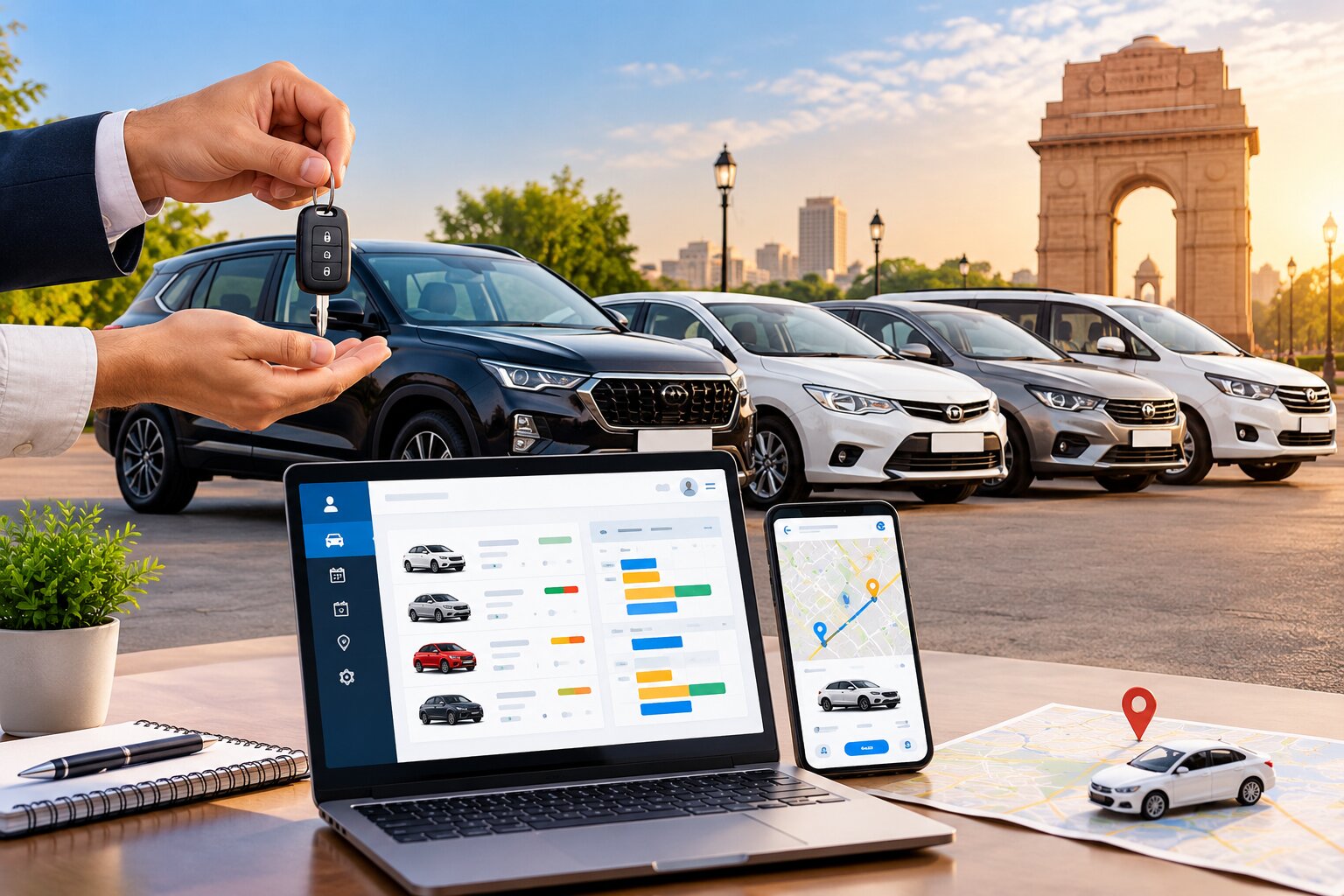
Best Software for Car Rental Business in India: Choosing the Right ERP and Fleet Platform
Running a car rental business on spreadsheets and phone calls works until the fleet crosses a dozen vehicles. After that, double bookings, missed vehicle returns, and manual invoicing start costing real money. Choosing the right rental platform means finding a system that connects bookings, fleet, vendors, and finance in one place, not a collection of disconnected apps.
What Is the Best Car Rental Software in India?
It is a platform that manages bookings, fleet, drivers, and billing together, not just one function in isolation. For most operators, that means ERP-based systems built for transport and rental operations rather than generic booking tools.
What Software Do Car Rental Companies Use?
Car rental companies in India typically use a mix of booking engines, fleet management tools, and GPS tracking software, with larger operators moving to ERP platforms that unify these functions. Smaller fleets often outgrow standalone apps within a year or two.
Why Generic Booking Tools Fall Short
A booking app alone cannot tell an operator which vehicle is due for service, which subcontracted vendor has an outstanding payment, or which corporate client’s invoice is overdue. Car rental businesses juggle self-owned fleets, subcontracted vehicles, corporate accounts, and outstation trips at the same time, and each of these has its own billing rules and documentation. Generic tools handle bookings well but leave fleet maintenance, vendor payouts, and GST-compliant invoicing to separate spreadsheets, which is where errors and revenue leakage creep in.
A connected ERP system solves this by putting bookings, vehicle assignment, fuel and maintenance logs, driver duty records, and invoicing on one platform. When a booking is confirmed, the vehicle, driver, and billing terms are already linked, so nothing has to be re-entered or reconciled later.
Core Features to Look For
When evaluating car rental management software, look for real-time fleet availability and vehicle status tracking, automated booking-to-invoice workflows, driver and duty roster management, GPS integration for live vehicle location, GST-compliant billing and e-invoicing, and reporting dashboards that show utilization, revenue per vehicle, and outstanding payments without manual consolidation. Cloud access matters too, since dispatch teams and drivers need updates from the field, not just from a back-office desktop.
Managing Subcontracted and Outstation Fleets
Most car rental operators in India don’t own every vehicle they dispatch. Peak season, corporate contracts, and outstation trips often rely on subcontracted vendors and affiliate fleets, and tracking who owes what to whom quickly becomes complicated without a system built for it. This is exactly where transport vendor and subcontractor management software earns its place — it tracks vendor vehicle assignments, trip-wise payouts, commission structures, and documentation like permits and insurance in one record, instead of across WhatsApp messages and paper vouchers.
Without this visibility, operators either overpay vendors due to duplicate trip claims or delay payments because reconciliation takes too long, both of which damage vendor relationships over time. A connected system settles vendor accounts against actual completed trips, which keeps subcontractor relationships predictable and audit-ready.
ERP Software for Car Rental Company Operations
This kind of system extends beyond bookings into full business management. It handles fleet acquisition and depreciation, insurance renewal tracking, fuel and maintenance costing per vehicle, driver payroll and duty compliance, and GST-compliant invoicing for both B2C and corporate clients. For operators running fleets across multiple cities, the same system gives head offices a consolidated view of utilization and profitability by location, rather than city managers reporting numbers manually at month-end.
Top B2B Car Rental SaaS Enterprise Tools
Enterprise fleets and corporate mobility providers have different needs than a single-city rental operator. These platforms need to support multi-branch operations, corporate billing cycles, contract-based pricing for large accounts, API integrations with travel and expense platforms, and role-based access for regional managers. Scalability matters here — the platform that works for 20 vehicles should still work cleanly at 500, without a system migration in between. Enterprise buyers should also check whether the platform is built on a proven ERP foundation, since that determines how well it will handle finance, compliance, and multi-entity reporting as the business grows.
How Preeminent Softcom Supports Car Rental and Transport Businesses
Preeminent Softcom implements Microsoft Dynamics 365 Business Central for car rental, fleet, and transport businesses across India, with a strong base in Noida and the wider Delhi NCR region. The platform brings booking-to-billing workflows, fleet and maintenance tracking, vendor and subcontractor settlement, and GST-compliant finance into one system, with Power BI dashboards for real-time visibility into utilization and revenue.
As a Microsoft Partner and ISO 9001:2015 certified implementation team with 5,000+ completed projects and a 4.98/5 average client rating, Preeminent Softcom typically completes Business Central implementations for transport and rental businesses within 8 to 14 weeks depending on fleet size and integrations required.
Frequently Asked Questions
Can car rental ERP software handle both self-owned and subcontracted vehicles?
Yes. A properly configured system tracks self-owned fleet operations and subcontracted vendor trips separately while consolidating them into one reporting and billing view.
How long does implementation take for a car rental or fleet business?
Timelines depend on fleet size, number of locations, and integrations needed. Preeminent Softcom’s Business Central implementations for transport clients typically run 8 to 14 weeks.
Does the software support GST-compliant invoicing for corporate clients?
Yes, GST compliance and e-invoicing are handled as standard finance functionality, covering both individual and corporate billing.
Talk to a Fleet ERP Specialist
Double bookings, vendor payment disputes, and manual invoicing are solvable with the right system in place. Preeminent Softcom’s team can review your current booking, fleet, and vendor setup and show where Business Central closes the gaps.