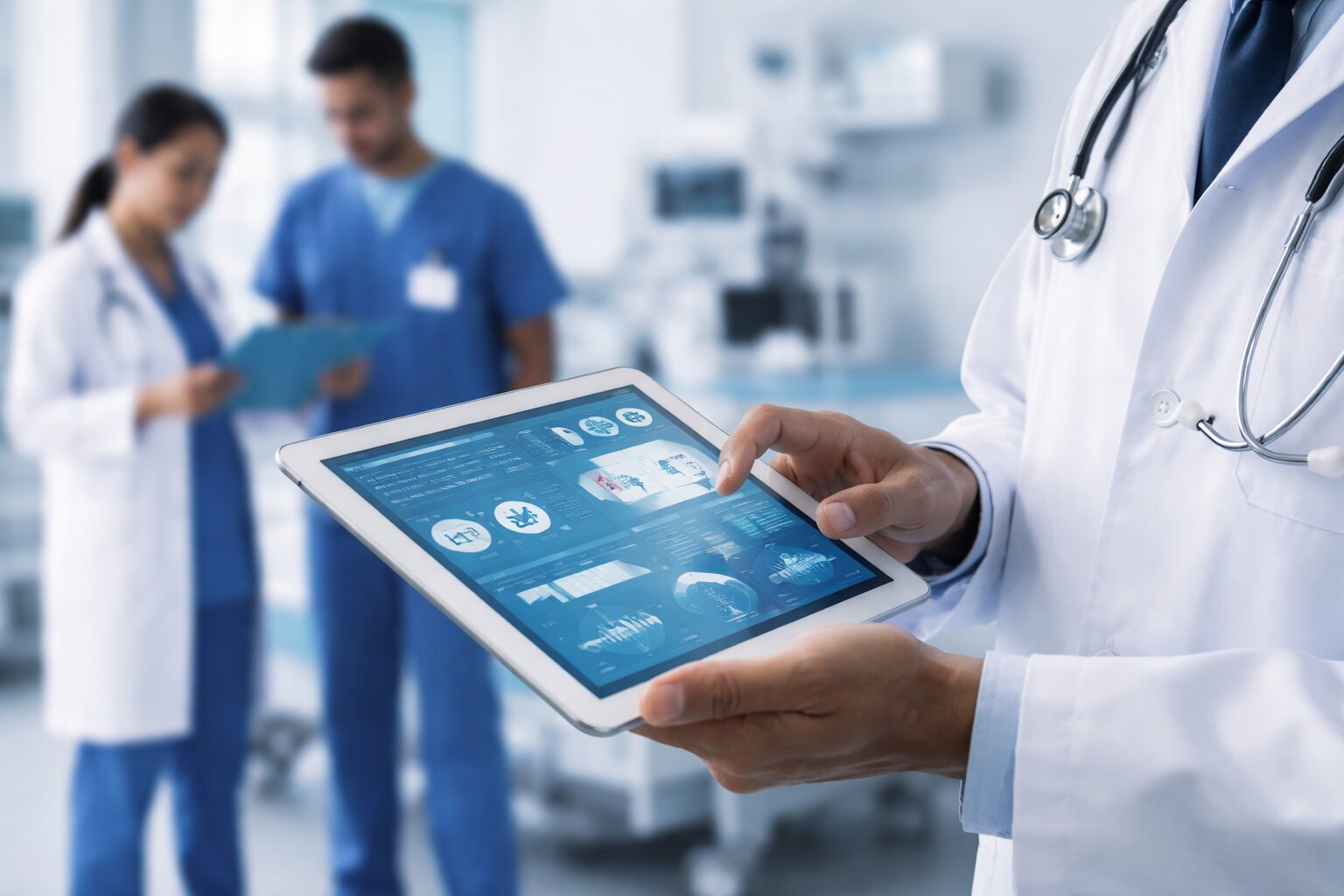
The healthcare sector remains dynamic, given the changing demands from patients, stringent regulations, and increased complexity in management. Hospitals are tasked with managing patient services, financial transactions, inventory control, personnel management, and compliance, among others. These challenges are usually not met through conventional systems that lack the capacity to provide the needed efficiency in today’s healthcare environment. This is where Top Hospital ERP Software for Healthcare Management becomes invaluable, helping healthcare providers streamline operations and deliver better patient outcomes.
ERP Software for Hospitals: Why Modern Healthcare Needs It
Many operations take place within hospitals on a day-to-day basis, including patient information, laboratory test results, pharmacy stock levels, and many more. The use of manual processing or disintegrated computer-based systems creates inefficiencies within the operations process. ERP Software for Hospitals brings all departments together into a unified system, helping address these challenges effectively.
ERP solutions ensure timely data availability, hence providing timely service to patients, proper billing, and efficient resource management. Hospitals using ERP technology have experienced improved workflow efficiency, making operations smoother for healthcare professionals.
Key Features of Top Hospital ERP Software
Modern ERP systems come with comprehensive modules that cover every aspect of healthcare management:
1. Patient Management System
Patient lifecycles are managed from registration to discharge using ERP systems. These include scheduling appointments, maintaining electronic medical records, and monitoring treatments for a smooth patient experience.
2. Billing and Financial Management
ERP systems automate the billing process, which helps minimize mistakes and facilitates effective revenue cycle management. They help streamline the processing of insurance claims, payments, and financial reporting.
3. Pharmacy and Inventory Management
Hospitals can monitor stock levels, expiry dates, and procurement processes in real time. This helps prevent stock-outs and reduces wastage of medicines and medical supplies.
4. Human Resource Management
ERP systems manage staff scheduling, payroll, attendance, and compliance requirements. Efficient workforce management ensures optimal utilization of healthcare professionals.
5. Laboratory and Diagnostics Integration
Integration with lab systems ensures faster test processing and accurate reporting, improving overall treatment efficiency.
Benefits of Cloud-Based ERP Software for Hospitals
The shift toward cloud-based ERP solutions has further enhanced the capabilities of healthcare management systems.
Anywhere Access and Real-Time Data
Cloud ERP allows hospital staff to access data securely from any location. Real-time updates ensure accurate decision-making across departments.
Reduced IT Infrastructure Costs
Hospitals no longer need to invest heavily in hardware or maintenance. Cloud deployment significantly lowers operational expenses while ensuring system reliability.
Scalability for Growing Healthcare Networks
As hospitals expand, cloud ERP systems easily scale to accommodate additional departments, locations, and patient volumes without disruption.
Enhanced Data Security
Modern cloud ERP platforms include advanced security features such as role-based access, encryption, and backup systems, ensuring patient data protection.
How ERP Improves Healthcare Management
ERP systems are not just software tools; they are strategic enablers of digital transformation in healthcare. By integrating clinical, administrative, and financial processes, ERP systems improve overall hospital performance.
Improved Patient Experience
Faster registration, reduced waiting times, and accurate billing contribute to higher patient satisfaction. Patients benefit from streamlined processes and better communication across departments.
Operational Efficiency
Automation eliminates repetitive tasks and reduces manual errors, increasing staff productivity and workflow efficiency.
Data-Driven Decision Making
ERP systems provide real-time analytics and reports, helping hospital administrators make informed decisions regarding operations, finances, and patient care.
Regulatory Compliance
Healthcare regulations require accurate documentation and audit readiness. ERP systems ensure compliance through structured data management and reporting tools.
Cost Optimization
By reducing inefficiencies, managing inventory effectively, and improving billing accuracy, ERP systems help hospitals control costs and increase profitability.
Preeminent Softcom: Delivering Smart Healthcare ERP Solutions
In this regard, the Preeminent Softcom company deserves the highest recognition as a reliable ERP software supplier for hospitals with tailor-made products that cater to practical hospital processes. The firm specializes in providing scalable and intuitive ERP software systems that combine all hospital departments under one umbrella system.
Preeminent Softcom is a well-known ERP software company for hospitals with experience in cloud ERP software products. In addition, the company offers reliable services that guarantee successful implementation and efficient ERP software performance.
The platform allows hospitals to have full control over their business activities, effective use of resources, and consistent delivery of quality health services to patients.
Conclusion
Health care providers require sophisticated IT infrastructure to cope with increased operational pressure and provide quality services. It is imperative for health care facilities to adopt the most appropriate ERP software to enhance their performance.
ERP systems in healthcare that are among the top-rated ERP systems come with many advantages as a result of automation, integration, and analytics, making the whole process smart. This is made possible by ERP systems that run in the cloud, enabling healthcare institutions to achieve flexibility and scalability at affordable prices and ensure quality patient care.
Preeminent Softcom supports healthcare institutions with ERP systems, which lead to their success in today’s healthcare business environment.
FAQ
1. What is ERP software for hospitals?
ERP software for hospitals is an integrated system that manages patient data, billing, inventory, HR, and other hospital operations on a single platform to improve efficiency and accuracy.
2. How does cloud-based ERP software benefit hospitals?
Cloud-based ERP software for hospitals provides real-time access to data, reduces IT costs, improves scalability, and ensures secure data management from any location.
3. Why is ERP important for healthcare management?
ERP systems streamline hospital operations, reduce manual errors, enhance patient care, and support better decision-making through real-time data insights.
4. What features should hospitals look for in ERP software?
Key features include patient management, billing, inventory control, HR management, laboratory integration, and reporting tools for efficient healthcare operations.
5. How does ERP software improve patient care?
ERP software improves patient care by reducing waiting times, ensuring accurate medical records, enabling faster diagnosis, and enhancing coordination between departments.